
How to Choose a Single-Phase Pad-Mounted Transformer: A Professional Buyer’s Guide

Views : 485
Update time : 2026-04-16 13:31:54

Investing in a single-phase pad-mounted transformer is a long-term decision that impacts grid reliability and safety. Whether you are sourcing for a residential development or an industrial site, understanding the technical nuances is key to avoiding costly installation errors.

This guide breaks down the selection process based on the Eaton Cooper Power series standards to help you find the perfect match.
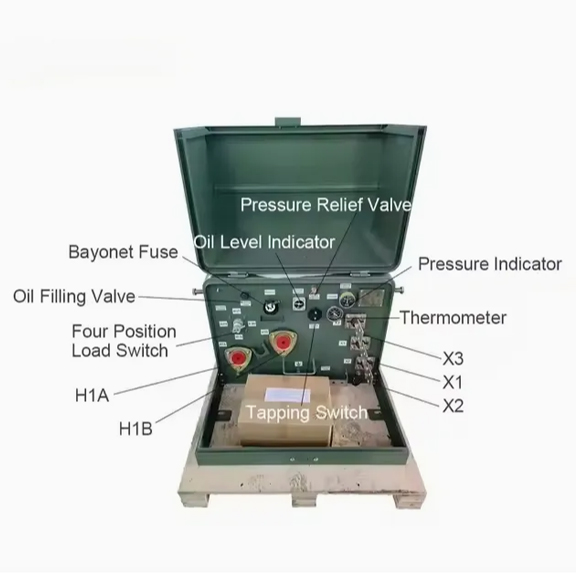

1. Match the Transformer Design to Your Site

Not all pad-mounted transformers are built for the same environment. Your choice should depend on the location's physical and aesthetic requirements:

(1.1)Shrubline™ (Residential Discreet): Features a low-profile design ideal for residential areas. It blends into landscapes near shrubs or home air conditioners.


(1.2)MaxiShrub™ (Industrial & Heavy Duty): A Type-1 design that allows for vertical cable feeding. Choose this for industrial applications or when heavy cabling is required.


(1.3)Ranch Runner™ (Compact & Remote): An economical, compact unit perfect for irrigation, oil fields, and rural residential sites.


2. Technical Specifications You Can't Ignore

To ensure the transformer handles the load, verify these core electrical ratings:

Feature Shrubline / MaxiShrub Ranch Runner
KVA Rating

10–167 kVA

10–50 kVA

Primary Voltage

2,400–19,920 V

2,400–14,400 V

Secondary Voltage

120–600 V

120–600 V

3. Insulation Fluid: Standard Oil vs. FR3™

Safety and environmental regulations often dictate your cooling fluid choice:

(3.1)Electrical Grade Mineral Oil: The reliable, standard choice for general applications.


(3.2)Envirotemp™ FR3™ Fluid: A fire-resistant, natural ester-based fluid derived from soy oil. It is highly recommended for fire-sensitive locations and offers superior environmental characteristics.


4. Prioritize Security and Protection

A transformer in a public space must be "tamper-resistant". Ensure your unit meets IEEE Std C57.12.28™ requirements for enclosure integrity.

Key Safety Checklist:

Dead-Front Construction: Ensures no exposed energized parts when the cabinet is open.

Corrosion Resistance: For coastal or high-humidity areas, opt for stainless steel tanks and hardware to prevent rust.

Fault Protection: Look for integrated options like Bay-O-Net expulsion fuses or Vacuum Fault Interrupters (VFI) to protect downstream loads.


5. Simplify Installation with Poly-pads

Shipping and site preparation can be expensive. Using a Cooper Power series poly-pad allows the transformer to be shipped and installed on the same base. This eliminates the need for separate concrete pad purchasing and reduces overall installation time

Related News
Read More >>
How to Choose the Right Residential Load Center: The Complete Buying Guide How to Choose the Right Residential Load Center: The Complete Buying Guide
Jul .16.2026
This complete guide explains the functions, application scenarios and core selection criteria of TYE LOAD CENTER for solar PV systems. It covers voltage standards, main current rating, circuit quantity, NEMA protection grades and common selection mistakes, helping engineers and installers pick the best load center for grid-tied and off-grid solar projects.
Laos Electricité du Laos (EDL) Delegation Visits Beite Transformer Co., Ltd. for Technical Exchange and Strategic Cooperation,Company News Laos Electricité du Laos (EDL) Delegation Visits Beite Transformer Co., Ltd. for Technical Exchange and Strategic Cooperation,Company News
Jul .14.2026
Senior delegation from Electricité du Laos (EDL) visited Beite Transformer Co., Ltd. for technical exchanges and factory inspections covering 110kV/220kV power transformers, DC charging piles, high and low voltage complete sets of equipment. A letter of intent for three-year strategic cooperation was signed to jointly boost China-Laos power collaboration and Southeast Asian power grid construction.
Inside a Transformer Insulation Material Factory: How Reliable Insulation Components Are Manufactured Inside a Transformer Insulation Material Factory: How Reliable Insulation Components Are Manufactured
May .21.2026
This article takes readers inside a professional transformer insulation material factory in China to explain how durable, standards-compliant insulation components are made. It covers the importance of insulation materials in transformers, lists commonly used parts such as DDP insulation paper, pressboard, and epoxy insulation, introduces automated CNC processing and modern workshop production, and details applications in both oil-immersed and dry-type transformers. The article also highlights OEM and custom manufacturing capabilities, showing the complete production system and quality control behind reliable transformer insulation solutions.
Insulation Coordination for Low-Voltage Switchgear: IEC 61439 Design Requirements Explained Insulation Coordination for Low-Voltage Switchgear: IEC 61439 Design Requirements Explained
May .16.2026
Our low-voltage switchgear assemblies are designed in accordance with IEC 61439 standards, providing reliable power distribution, protection, and control solutions for industrial and commercial applications.

With optimized insulation coordination design, the system ensures stable performance under demanding operating conditions, including high humidity, high temperature, and unstable power environments. The products feature safe clearance and creepage distances, high dielectric strength, and strong resistance to insulation aging and electrical faults.

Widely used in industrial plants, commercial buildings, renewable energy projects, and infrastructure systems, our switchgear solutions offer:

High operational reliability
Stable electrical performance
Flexible customization
Easy maintenance
Compliance with international IEC standards

We also provide OEM and project-based customization services to meet different market and application requirements.